
Rich Harwood
President & Founder, The Harwood Institute
Author, Speaker, Innovator

For 35+ years, Rich has devoted his career to revitalizing the nation’s hardest-hit communities, transforming the world’s largest organizations, and reconnecting institutions to society. His innovative philosophy of Civic Faith and Turning Outward practice have spread to all 50 states and 40 countries worldwide. He has been recruited to solve some of the most difficult problems of our time, including being called into Newtown, Connecticut, after the massacre at Sandy Hook Elementary School. He has appeared in numerous national media outlets, has written scores of articles and groundbreaking reports, and nine books, including his newest release, The New Civic Path: Restoring Our Belief in One Another and Our Nation.
Download Rich's full biography.
Contact Rich at rich@theharwoodinstitute.org.
Connect with Rich ON SOCIAL MEDIA
Books
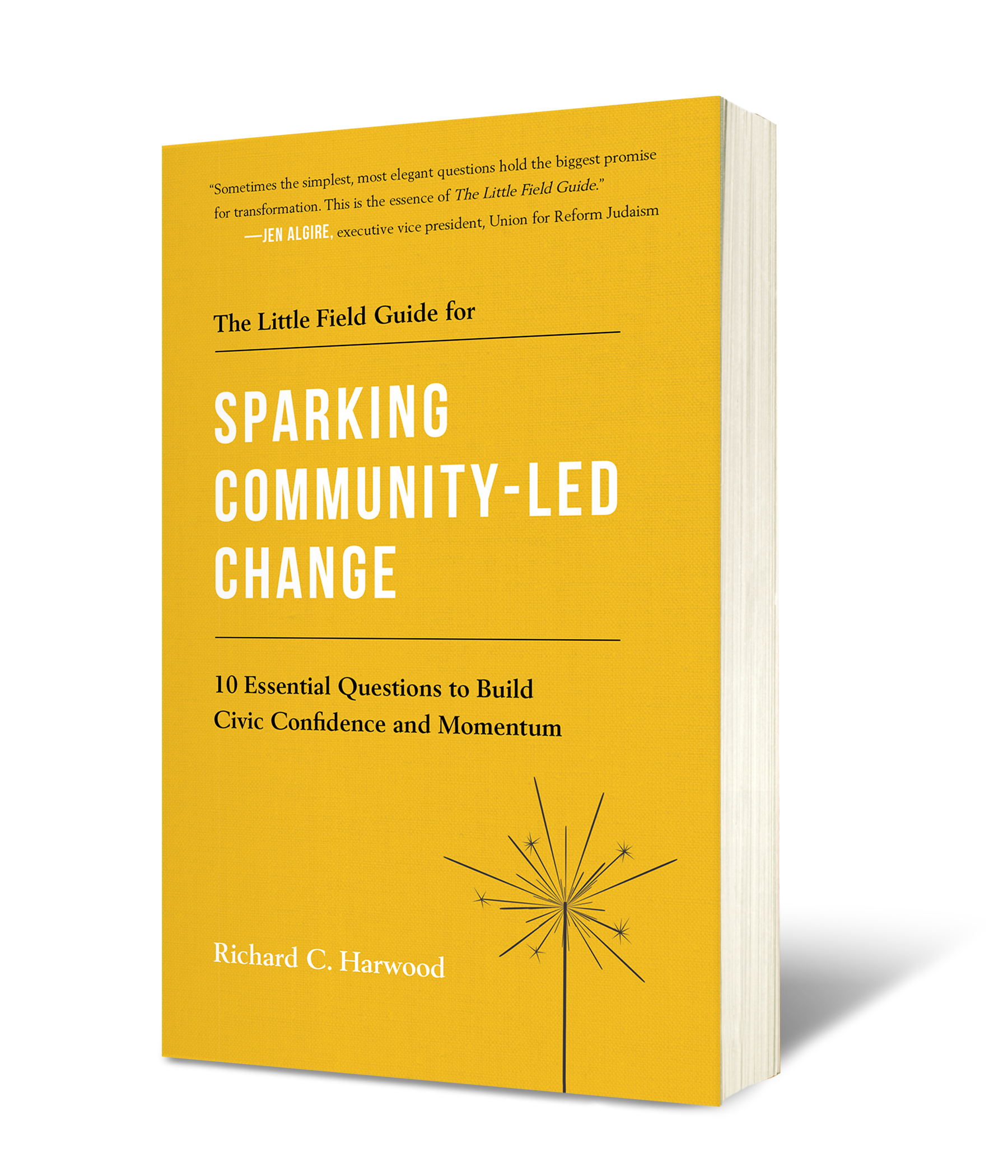
By Richard C. Harwood, Studio Books (2025)
Creating change in communities is hard. Getting people and resources in motion and keeping them aligned is a big challenge. Creating something sustainable is even tougher. Generating results can be downright elusive. What are we to do? How can we get started in ways that increase the likelihood of long-term success?
If we want to spark community-led change, then how we do the work is as important as what we do. And the early steps we take matter—a lot. Drawing on over 35 years of experience leading change in communities across all 50 states and 40 countries worldwide, Harwood reveals ten essential questions that are often overlooked in community change initiatives. With inspiring stories of transformation and actionable strategies, this field guide is a must-read for those ready to step forward, meet communities where they are, and forge sustainable momentum that creates a new trajectory of hope.
ORDER ON AMAZON

By Richard C. Harwood, Kettering Foundation Press (2021)
How can we unleash the innate potential of people, institutions and groups in communities to address our common challenges? And how can we do this by creating a civic culture in which people come together to shape their own lives and gain real hope?
In Unleashed, Richard C. Harwood draws on his 30 years of experience working with communities to answer these two critical questions. Harwood shows us that:
Change ripples out in communities through an interaction of highly intentional actions and serendipity.
The change then cascades and spreads through a chain of events over time.
These interactions often occur in unexpected ways, in unimaginable combinations of people and partners, and with unforeseen results.
This chain reaction can be proactively catalyzed and nurtured.
Through these interactions, people can restore a belief that we can get things done together.
Americans yearn to create a society that reflects the best of us, the best in us. In Unleashed, Harwood helps us see how we can create a more equitable, fair, inclusive and hopeful path forward.

By Richard C. Harwood, Greenleaf Book Group (2019)
Many of us are frustrated by the divisive nature of our public discourse, mistrust and broken promises. We lack hope that we can bridge our divides, come together and get things done.
Rich Harwood offers a new path forward. He argues that we don’t have to accept the divisions, gridlock and negativity happening in our country. He knows, from working in communities for more than 30 years, that we can rediscover what we share in common and actively build upon it.
Stepping Forward shows us how to channel our frustrations, energies, and aspirations to get on a more hopeful path. This book shows us how we can step forward to —
Turn Outward to see and hear each other again and afford every person human dignity
Rediscover what we share in common by focusing on our shared aspirations, even amid our real differences
Recognize we must tap into our innate capabilities to produce meaningful change
Forge a new shared responsibility to marshal community resources to solve problems and harness people’s yearning for genuine engagement
Create a new can-do narrative by focusing on civic parables that remind us that we can be actors, shapers and builders of our shared lives
To get the country moving in a better direction, these efforts must start in our local communities. Then we can restore our can-do spirit and faith in ourselves. You don’t need to wait.

By Richard C. Harwood, Kettering Foundation Press (2012)
Based on deep conversations with Americans about the kind of country they want, The Work of Hope shows that fixing politics or even the economy won’t fix what is broken in the country. But, the good news is people have a clear sense of what it will take to move forward.

By Richard C. Harwood & Aaron B. Leavy, Kettering Foundation Press (2011)
What happens when organizations turn outward and become more intentional in creating change? Follow the path of 12 remarkable public broadcasting stations as they make a compelling case for the power and potential of Turning Outward toward the community.

By Richard C. Harwood, W.K. Kellogg Foundation Press (2007)
Five factors each of us must consider as we work to create change and make hope real in our communities. Included are tools for thinking about your work and creating local conversations about what it takes to make hope real.

By Richard C. Harwood, Kettering Foundation Press (2005)
A vital resource for all who work to create change and move the nation forward,Hope Unraveled reveals a reality that transcends growing consumerism, distorted realities and false divisions, and lays out an alternate path for politics and public life for all Americans.

By Richard C. Harwood (2002)
This treatise lays out in detail the aspirations Americans hold for political leaders, news media, and their fellow citizens, as articulated by participants in our Citizen Assemblies and other Harwood Institute projects.
speaking events
Rich keynotes events all over the world, discussing what we can do to make community a common enterprise and combat the divisiveness holding back progress. If you’re interested in bringing Rich to your community, please email us.
“The most important part of our work was creating both a shared vision for our community and a shared responsibility for that vision. Harwood helped us see that.”
Redeeming Hope Blog

Twenty-five years have passed since 9/11, and I remember that dreadful day as if it was yesterday. Are we a better nation? Stronger? More vibrant? Kinder?
If you’re like me, you love this country. Yet on this July 4th—which is also the 250th anniversary of our nation—it can be hard to express such love. Such is the nature of love, right? In all parts of our lives, love is often filled not only with joy, but with ambivalence, conflicting feelings, even anger. It can make celebrations of our love for others—and for this nation—tenuous, difficult, even foul. So, what does it mean to love America today?
With the war in Iran, I pray for the safety of our troops and all innocent civilians. I also pray for the health of our nation. Let me be clear. I am not a politician. I do not seek to make a political argument here. Indeed, I wish to make a human and cultural plea at this pivotal moment.
I know so many people are approaching America’s 250th anniversary with a sense of trepidation, even dread. Is there really anything to celebrate given the recent chaos and uncertainty we’ve been experiencing? Is productively reckoning with our history a possibility these days? And how hopeful will we allow ourselves to be about the future of the nation, its ideals, and our sense of belonging to something larger than ourselves?
I want to talk with you for a moment about your thirst for doing the work you do. Nothing comes easily these days; even our own allies sometimes feel like the biggest obstacles we face. And yet, we each keep going—you keep going. Good things happen.
This weekend I watched Charlie Kirk’s memorial service alongside millions of other Americans. In the aftermath, President Trump’s remarks have dominated many of the headlines. But there is another story from this weekend we should pay attention to: the revival people clearly are seeking. The yearning was palpable.
The cold-blooded murder of the young, conservative activist Charlie Kirk yesterday is a tragic reminder of the state of our nation. We must awake ourselves to the hard truth that confronts us: while our politics are broken, there is something much deeper and more profound happening in America. We face a cultural and human dilemma.

On this July 4th, patriotism is a difficult subject for many. Maybe you, too. If so, I hear you. After all, we live in a nation that can feel chaotic, confusing, even confounding—regardless of who you voted for in the last election.

I was in Selma, AL, this past Sunday for the commemoration of the 60th anniversary of Bloody Sunday. Now that the event has passed, the question that nags at me is this: Will the significance of Selma continue to hold our imagination, or will it subside back into our distant memory until another year passes?

A few weeks ago I was in Selma, AL, to keynote the local NAACP’s annual banquet celebrating the 59th anniversary of the voting rights act. Nearly sixty years on, the voting rights act remains one of the most important pieces of legislation in our history.
Voting is a sacred responsibility. When Americans head to the polls we are equals among equals. Each of us must vote our conscience this year. But here’s what I told the packed room that night in Selma. Voting alone won’t solve what ails us.

I wanted to write to you after the attempted assassination of former President Trump. Consider this a personal note directly to you. And know that I have intentionally held off rushing to send you any thoughts to allow things to settle a bit. There’s already too much noise enveloping our politics and lives.
First, like most Americans, I am praying for the former president, his family, and all those affected by this weekend’s events. There is no room for political violence in our nation.
On almost a daily basis people tell me they’re angry about the country’s past and present. Hopeless or despairing about its future.
On this Fourth of July, do we dare celebrate the country? Condemn it? Simply walk away from it?
What interests me as we approach the Fourth is how we can harness the torn feelings many of us have for America—the mix of positive, negative, and complex—toward reclaiming a patriotism that leads us forward rather than divides us.

It can sound trite to say, “I’m so proud to be associated with you.” I’m sure you’ve felt this way at some point, right?
It’s a statement that can ring hollow.
But when the moment comes when that feeling is real—really real—when it pierces your soul, when your eyes well up with tears, when your heart is so full you’re convinced it’s going to burst—in that moment, at that time, you experience a kind of transcendence from being truly awake, present, even naked in your genuine sense of connection and joy. Standing before folks in Reading, PA this past week, that’s how I felt.
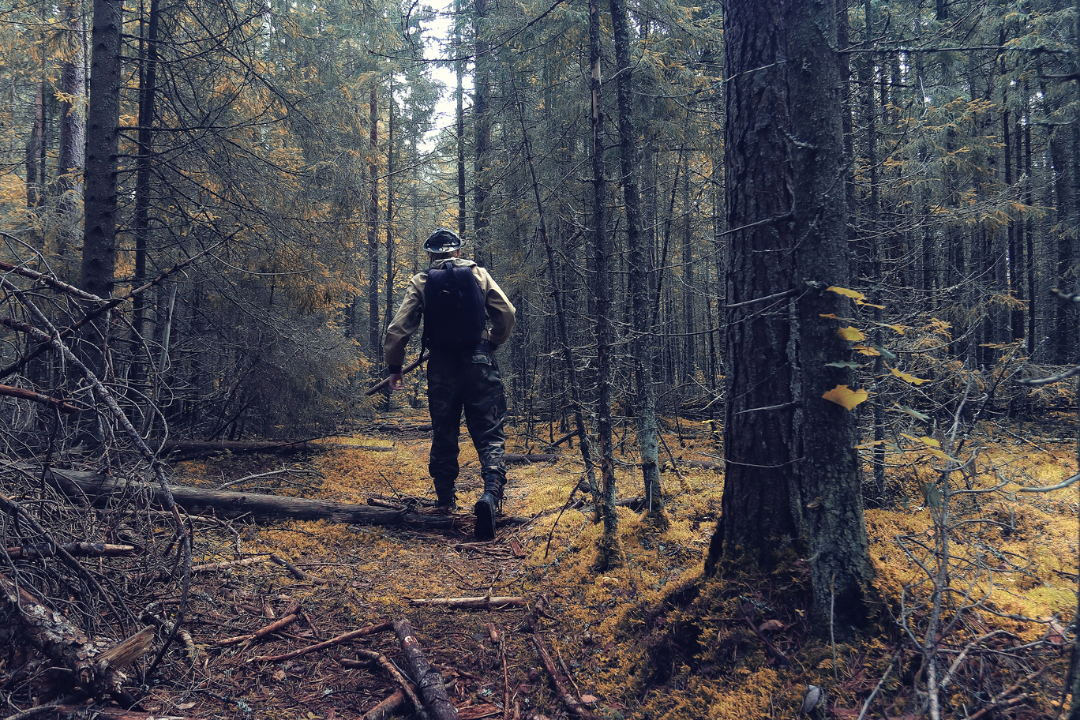
“Remember, your mission is to hide from me…. If you’re in the open, you don’t want to look human.” All across our country, people are seeking to hide from others in one way or another. But can we create the communities and society we aspire to if we are in hiding?

I’ve been thinking a lot about the word “enough” lately. Its use gives rise to both anger and aspiration. Think about it. What have you had enough of? What does it propel you to want?

I’m writing this note on a plane heading home from our first “Enough. Time to Build.” campaign event in Fresno, CA. Among the many profound experiences I had on this trip, I find myself thinking especially about two women I met. They each have much to teach us about how we can build together as Americans.

I am writing a deeply personal note to you this Sunday. I hope that you will take a few minutes to read it, and to write to me. I hope you will join me. It’s that important. This week, I launched a new nationwide campaign, “Enough. Time to Build.”

A community leader recently said to me, “I just don’t know if I can do this anymore.” It’s a common refrain I’m hearing. People’s words often come haltingly, filled with regret, pain, and anger.
Maybe you feel this way, too.
It’s easy to feel exhausted, beat up, frustrated by just how hard it is to get things done nowadays. The challenges that our organizations, communities, and society face are mounting, piling up, and getting harder to address. Some are new; others are just being uncovered, but have long been with us.
Sometimes the very people who are supposed to be your allies, your supporters, your partners, throw up more obstacles than clear pathways for you to move forward. At times, you might feel weary, even scared, to step forward and say what you really think or believe for fear of being shut down or having your motivations questioned.
You’re not alone. Please, don’t feel alone.
On Monday, another mass shooting claimed six lives, including three children, at The Covenant School in Nashville, TN. As I heard the news, my thoughts turned to Uvalde, to Parkland, to Newtown. To the many other communities who have faced similar tragedies and are searching for a way to feel safe. I was reminded of the piece I wrote last year in the wake of the Uvalde shooting about what it means—for us, for our communities—to feel safe. I believe now, as I did then, that it is well past time for action. I invite you to revisit this piece with me. Take the words to heart, then let’s get to work—together.

I wanted to personally write to you at this critical moment in our country: our public square is being hijacked by the loudest, noisiest, and most divisive voices and groups. I believe deeply we must take intentional action to counter these negative forces taking over our public square.

Ten years ago last week, a gunman killed twenty first graders and six adults at Sandy Hook Elementary School in Newtown, CT. The massacre shook the nation. Just weeks later, I was called into Newtown to help the community move forward, from trauma and despair to healing and hope.
Since then, school shootings have become so common that kids report imagining how they’d react if it happened to them. I have two children of my own; no child or parent, anywhere, anytime, should have to imagine such tragedy.
The U.S. has more guns on the street than any other nation, with gun violence on the rise. In the last five years, the U.S. has had more mass shootings than any other comparable time span dating back to 1966. What’s going on? What should we be thinking about—and doing?
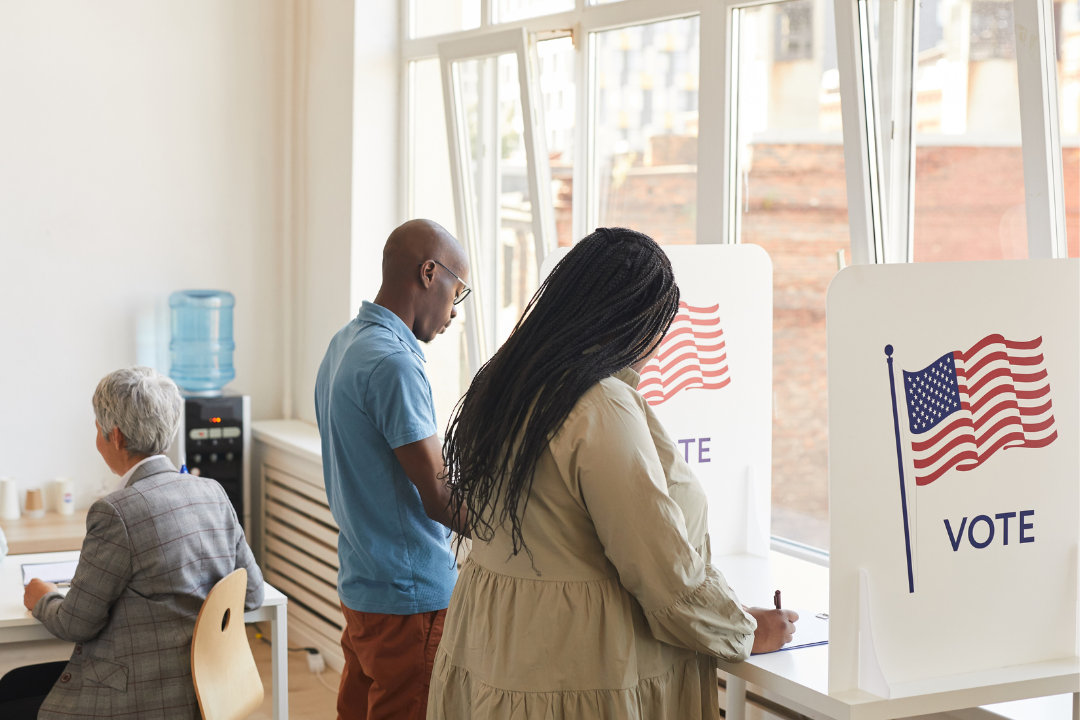
The 2022 elections are over, and the political instability once predicted seems to have passed. But the challenges people face in their lives have not magically evaporated because of one election season, nor have future political shenanigans. You, me and others who believe in creating a more inclusive, hopeful path moving forward must act—and with renewed intentionality. There is work to do, progress to make, hope to build. Now.

As election day approaches, tension and anxiety are rising to a feverish pitch across the country. What will be the fall out, and how will people and our nation endure the potential chaos and uncertainty that ensues? It is at this moment that we—you, me and others—must reclaim hope. Now.
The morning following the first public hearing investigating the January 6, 2021, attack on the U.S. Capitol, Rich Harwood offers a perspective on where we can find hope today despite the intensely negative news cycle. He urges us not to deny that may be tired, defeated, or even enraged. But that we find and embrace hope amid the many struggles and crises in the world today.
In the aftermath of the May 24th school shooting in Uvalde, TX, Rich Harwood reflects upon what it means to feel safe in our society and makes an entreaty to us all to take necessary action to ensure that every individual feels safe and holds real hope for their lives.
In the aftermath of the May 14th supermarket shooting in Buffalo, Rich Harwood offers his perspective on what it means to matter and to treat all Americans with the dignity and respect that is their birthright.
During his first State of the Union address, how can President Biden speak to the real concerns of Americans and call us forward to discover anew what we hold in common? Here’s how.
"The Drum Major Instinct" is one of my favorite Martin Luther King, Jr. sermons. It asks, “What does it mean to step forward to lead and serve?” This is especially important for any of us with a burning desire to create a more just, fair, equitable, inclusive and hopeful society. So, what is the nature of your own path?
On September 11, 2001, I was working in my home-study on a new book when I got a phone call from an old college friend imploring me to turn on the TV. There, I saw a plane ram into one of the World Trade Towers, where my college roommate Frank worked for Cantor Fitzgerald. In his anguish, he left a phone message for his wife. We lost him. I lost him.
As I watch the crumbling of Afghanistan, as I listen to Americans in a new mood of America study I am conducting, as I listen to the hyped and dangerous political debates over critical race theory, among so many other things in our world today, I wonder: Where is our humility?
Featured Media
Discover how lean funders can nurture the fundamental conditions for any systems-change effort, no matter the specific issue or goal - by helping to build the civic culture of their community. By civic culture, we mean the ability of people in a community to come together, agree on a goal that is important to them, and get things done together. Our guest is Rich Harwood, founder of the Harwood Institute, a 40-year old organization that equips people, organizations, and communities with the tools to bridge divides, build capacity, and tackle shared challenges. By playing roles of listening, coaching, and teambuilding over time, the Harwood Institute, often in partnership with lean foundations, helps people find new ways to talk with each other, create different relationships, different norms, and new ways of working together.
Since 2001, our nation has lived through a series of seemingly endless wars and a global pandemic. The internet has overwhelmed many of our senses, and AI now threatens to replace basic human interactions. People have lost faith in our leaders, institutions, news media, even in each other. I believe we face a crisis of belief.
Rich Harwood will discuss what Reading’s experience can teach other communities about moving beyond dialogue and taking action on issues that affect people’s daily lives. He’ll also talk about his newest book, The New Civic Path: Restoring Our Belief in One Another and Our Nation, and the “Civic Faith” and “Turning Outward” approaches he has developed through decades of work across all 50 states and 40 countries.
Now is not the time to surrender to a politics that further destroys hope and will indeed lead us off the cliff. People’s yearning for a different political culture in this country grows by the day. We cannot let politicians and their consultants take our politics hostage. Americans want something better.
Abraham Lincoln believed in the promise of America and in the need to engage relentlessly in the work of building a more perfect Union. In July, our own Rebecca Kilborne sat down with bestselling author Rich Harwood to discuss his recent book, The New Civic Path: Restoring Our Belief in One Another and Our Nation.
The report includes the main themes that emerged from conversations and interviews; voices of the people from Rockingham County; a snapshot and analysis of the fundamental structures, networks, and norms of Rockingham County through the lens of The Harwood Institute’s Public Capital Framework; and key recommendations for investing in and growing the community’s civic capacities and renewing a sense of possibility and hope.
“The biggest challenge we face in America today is how do we restore a sense of belief that we can get things done together — not as Democrats or Republicans or Independents — but as Americans? It’s the central question we face in society.”
A new report on the future of Rockingham County offers valuable insights into how the community wants to shape its future.
Why do good people remain silent when they see problems that need to be addressed? The problem schools face is not always that there is too much conflict. Sometimes the greater problem is too little: people hold back concerns, avoid questioning decisions, remain quiet about problems that everyone can see, or simply disengage.
For me, I think about what “patriotism”—and being a patriot—means. It isn’t about holding a blind allegiance to the country, wrapping ourselves in the flag, and using it as a weapon to denigrate, diminish, or even decimate those who look different from us or hold different views. I flatly reject such patriotism. I believe we all must.
In a recent Beyond The Blog podcast, Debra Jacobs, President and CEO of The Patterson Foundation, speaks with Rich Harwood, President and Founder of The Harwood Institute for Public Innovation, a nonprofit advancing positive community action by inspiring people and communities to turn outward.
What does it take to heal a divided town? Less talking, says Rich Harwood. After almost 40 years running the Harwood Institute for Public Innovation, he's watched the poorest community in America and some of the most divided places in the country do what most of us have stopped believing is possible: build something together, across every line that's supposed to keep them apart. The conversation runs from Moses and Lincoln to a synagogue firebombing to the three working men who saved his life as a sick kid, and lands on a deceptively simple idea about what we owe one another.
Rich Harwood shares how his childhood experience with cystic fibrosis and a profound sense of being unseen shaped his life’s work around dignity, compassion, resilience, and strengthening communities. He reflects on the mentors and experiences that taught him the transformative power of truly seeing and hearing others.
Of course, politics is important. But a hyper focus on each “next election” can cause us to miss a deeper issue that is at the root of what holds the country back. We suffer from a pervasive and crippling crisis of belief—in our leaders, institutions, systems, even one another.
As we mark Juneteenth this year, our country is under enormous strain as we are confronted by a series of deeply human questions. Will we see and hear one another? Will we afford one another dignity regardless of race, income, geography, or what God we pray to? Will we work to create an inclusive America when we are being pulled apart?

Our country and our politics are at an impasse. Just consider our past four presidents: Obama, Trump, Biden, and back to Trump. The country keeps swinging from one end of the political spectrum to the other with no clear, sustained direction.
Which begs the question: what’s the breakthrough we need to get us out of this impasse and moving in a more hopeful way—together?

In this episode of Aspirations to Actions, a Beyond The Blog podcast, host Alicia Chalmers talks with Michael Prihoda, Director of Media and Creative Content, and Menal Khanna, National Campaign Manager at The Harwood Institute for Public Innovation. Together, they explore The Harwood Institute’s powerful approach to community‑driven change and why you should join the upcoming National New Civic Path Virtual Book Circle on June 2.
In this episode of the Democratic Dilemma, Rich joins Mary Noone and Josh Stanley to break down why the American contract is broken, why throwing money at problems doesn't work, and what actually rebuilds trust and belief in communities. He shares the real story of how Reading, PA, once declared the poorest city in America, came together across dividing lines to transform education, youth programs, and civic culture without spending an extra dime.
Each day, the challenges in our nation pile up. In just recent weeks, there has been the ongoing war in Iran and the Middle East, and ongoing debates about the growing negative impact of the Internet, looming AI challenges, and the Epstein files. The anticipation of divisive, even ugly, midterm elections only adds more angst to our woes. It can feel like we have lost control over our present and our future.
Is there an antidote? Yes. But we must seize it together.
Rich Harwood’s latest for the Christian Citizen explores the opportunity for faith leaders at this historic moment for our country.
I know so many people are approaching America’s 250th anniversary with a sense of trepidation, even dread. Is there really anything to celebrate given the recent chaos and uncertainty we’ve been experiencing? Is productively reckoning with our history a possibility these days? And how hopeful will we allow ourselves to be about the future of the nation, its ideals, and our sense of belonging to something larger than ourselves?
With each passing day, more chaos and confusion envelop us as a nation: from battles in local communities over Immigration and Customs Enforcement to the burning of synagogues to attempted cuts in childcare support.
I tend to find people reacting in one of two ways. Retreating, even unplugging entirely from the media and the public square. Or getting fired up and looking to take action.

Brook Manville, historian, consultant, and author of The Civic Bargain: How Democracy Survives, profiles Rich and the Campaign for the New Civic Path on his Substack, The Civic Bargain.

Rich appears on the Circulating Ideas podcast to discuss the New Civic Path and the critical role libraries play in our communities.
We Americans are increasingly consumed by troubling questions: How can we work with others we disagree with? Will anything positive happen right now in our communities, let alone the country? And how do we navigate the relentless negativity pouring in from the media, social media, and our toxic national politics?

In The Chronicle of Philanthropy, Rich opines that philanthropy reflexively tries to solve problems with sweeping plans, but should instead, fix what matters most to people to set off a chain reaction of community-driven action.
In 1965, Selma, AL, pierced the consciousness of the nation when civil rights marchers crossed the Edmund Pettus Bridge. Today—amid our crisis of belief and widespread societal turmoil—Selma can remind us of the work we need to do as individuals, as communities, and as a nation.
By Richard C. Harwood, Studio Books (2025)
We are suffering from a crisis of belief in our country today. So many people have lost faith in America—in our leaders, institutions, and even one another. The status quo is not working for far too many of us. Our central task today is to meet this historic moment. But how do we grow our belief that we can get things done together—not as Republicans or Democrats or Independents, but as Americans? How do we rebuild trust and reclaim agency?
In this deeply personal manifesto written while crisscrossing the country for his “Enough. Time to Build.” civic campaign, Richard C. Harwood reveals how we can address the fundamental challenges holding us back in America today. We must dedicate ourselves to forging a new civic path that grows our belief that we can move forward amid our real differences. The New Civic Path is a must-read for those who want to spark civic renewal and get our communities and the country moving again.
ORDER ON AMAZON